
Honoring Our Ancestors: A Very Important Remembering

Updated: 3 minutes ago
“To get a human body is a rare thing, make full use of it,”
-Swami Brahmananda Saraswati
There are certain times in the rhythms of nature when we are invited to turn our attention in a particular direction. Spring is about renewal, the full moon invites us to beautify and celebrate, while new moon is for introspection and quiet.
Pitra Paksha asks us to remember. Pitra Paksha, means “the fortnight of the ancestors.” It is a sacred period in the Vedic tradition devoted to remembering and honoring those who came before us. Traditionally, it is a time for offerings, prayers and acts of remembrance intended to nourish and bring peace to the ancestors.
But what does honoring the ancestors actually mean for those of us living ordinary householder lives? We're all busy raising families, working, caring for others, practicing yoga, cooking, paying bills and trying to become more conscious human beings.
It all begins with a very simple question: Who gave me this life...and what is the purpose of my life?
The Preciousness of Human Birth
The great Vedic teacher Swami Brahmananda Saraswati taught that human birth is an extraordinarily precious opportunity. Human beings possess the remarkable capacity not simply to live, but to reflect upon life itself. We can ask: Why am I here? What am I meant to learn? Why was I born into this particular family? What have I inherited? What am I meant to carry forward? What might be mine to change?
One traditional teaching compares the human being to a lump of pure gold that has not yet been fashioned into jewelry. Its potential remains enormous. Human life gives us the possibility of conscious action—purushartha—and therefore the possibility of spiritual evolution.
Pitra Paksha gives that teaching another dimension because none of us arrived here by ourselves. Before there was you, there was your mother. And her mother. And her mother. Before there was your father, there was his father, and another father before him. Generation upon generation. Some of their names we know. Most we do not.
Yet, through an almost unimaginable sequence of births, deaths, relationships, migrations, hardships, illnesses, choices, accidents, sacrifices, heartbreaks and survivals, life reached you. Isn't that amazing?
Dr. Robert Svoboda describes this in wonderfully practical terms. We owe our existence to our parents, their parents and the generations before them. He speaks of the genetic and even epigenetic inheritance we receive from our forebears. Pitṛ Pakṣa is an opportunity to acknowledge that debt- not as something burdensome, but as recognition that this life did not begin with us.
Who Are Our Ancestors?
When we hear the word ancestor, we usually think first of our mother and father, grandparents, great-grandparents and the generations of our bloodline stretching back beyond memory. They are certainly our ancestors. They are quite literally part of our bodies. We carry something of them in our bones, our faces and our biology.
But ancestry can be understood more broadly. Our ancestors may include the people who raised us and profoundly shaped our lives. They may include beloved friends and members of our community who have died. They may include cultural and spiritual ancestors—the teachers, sages and wisdom keepers through whom traditions have been carried forward.
My own life, for example, has been shaped by teachers who gave me practices that were given to them by teachers before them. When I practice yoga, Ayurveda, mantra or sadhana, I am participating in something that did not begin with me. Wisdom traveled through many lives before it arrived in mine.
Our ancestors may therefore be ancestors of blood, ancestors of family, ancestors of culture and ancestors of spirit. And not all ancestors were wise, loving or healed. This is important.
Ancestor practice is not ancestor worship, nor does it require us to romanticize our families. Some people inherit beautiful family histories. Others inherit addiction, abuse, abandonment, poverty, prejudice, secrecy, emotional dysfunction or other forms of suffering. Most families contain some mixture of both.
The teachings I used in an ancestor workshop years ago expressed this beautifully: we inherit not only the difficulties of a lineage but also its resources. A pattern of violence might contain a distorted form of courage. Scarcity may exist beside an extraordinary capacity to provide. Great sensitivity may appear in one generation as something that needed to be numbed and in another as the seed of an artist, healer or deeply compassionate person.
So ancestor work asks us to look at our inheritance with open eyes.
What came through my family that I want to continue? What came through my family that I am ready to stop carrying forward?
The Ancestors Are Not Simply Behind Us
One of my important teachers, Maya Tiwari (Mother Maya), introduced me to ancestor sadhana (practice) and helped me understand ancestral memory in a much deeper way.
In her teachings, honoring the ancestors is an ahimsa practice- a practice of non-harming. She teaches that we may unconsciously carry ancestral memories and habitual patterns into our own lives and that conscious remembrance can help us recognize and transform what has been carried through the family line. That teaching has stayed with me.
The ancestors aren't simply behind us. They are within us. Their stories may live in our family traditions. Their foods may still appear on our tables. Their expressions unexpectedly come out of our mouths. Their gestures may live in our hands. Their strengths may appear in moments when we have no idea where our strength came from. And their unfinished patterns may live within us as well. We may find ourselves thinking, My mother did exactly that. Or suddenly recognize our father's reaction in our own. Sometimes what travels through a family is beautiful. Sometimes it is painful. Usually it is both.
Mother Maya's teaching is not that we should become preoccupied with the wounds of the past. Quite the opposite. Sadhana allows us to become conscious of what we carry so that we are no longer unconsciously carrying it. Awareness gives us choice.
Ka? Ka? Ka?
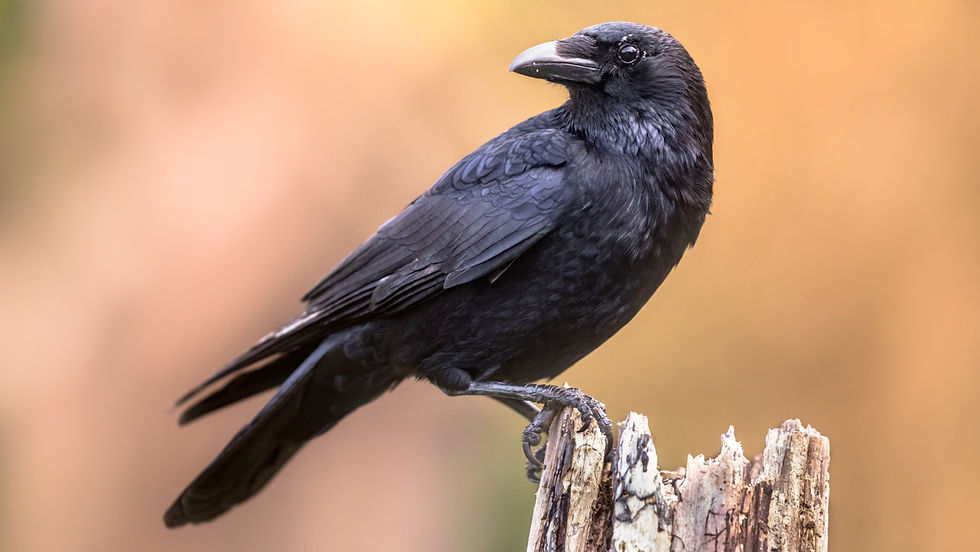
There is another teaching that I love during this season. In traditional Hindu practices, food may be offered to crows during ceremonies for the ancestors. And the crow calls...Ka? Ka Ka! Ka is associated with questioning in Sanskrit. The crow becomes a beautiful symbol of the questions the ancestors leave with the living: Why? Who? What?
Who gave me this life?
Why was I born into this family?
What have I been given?
What am I going to do with it?
The writing that originally inspired this reflection describes the crow as the voice of the ancestors calling us toward life's most fundamental questions. Perhaps that is one of the best gifts of being human. We can ask, and then we can choose what happens next.
Householder's Ancestor Sadhana
This is where I think ancestor practice becomes especially meaningful for those of us living a householder's life.
Honoring the ancestors doesn't require knowing Sanskrit, performing elaborate rituals or understanding traditions that may feel very far removed from our everyday lives.
Traditional rituals have tremendous beauty and importance. But there is also a very accessible way to understand this practice. Live your life well.
One of the teachings I shared in an ancestor class years ago said that perhaps the most important (and most challenging) way to honor our ancestors is to fulfill our potential and purpose here on Earth. And that doesn't necessarily mean doing something grand.
It may mean learning to express our emotions in healthier ways. Telling the truth in our relationships. Asking for help when we need it. Taking better care of our bodies. Becoming sober. Making peace where peace is possible. Learning something our parents never had the opportunity to learn. Treating our children differently than we were treated. Becoming more responsible with money. Ending a family silence. Apologizing. Forgiving. Setting a boundary.
It means becoming a more loving and reliable human being. Whatever helps us become more ethical, balanced and open-hearted can itself become an offering to our ancestors.
I find that extraordinarily freeing. Your kitchen can become part of your sadhana. Your marriage can become part of your sadhana. Raising your children can become part of your sadhana. How you heal yourself can become part of your sadhana. And every time an old family pattern arrives at your doorstep and you consciously choose something healthier, that too can become an offering. This is householder yoga.
We Can Also Remember Them Simply
During ancestor time we can also create intentional moments. Place photographs of loved ones who have died somewhere meaningful in your home. Light a candle. Place flowers or a small bowl of water there. Prepare a food that someone loved. Tell your children or grandchildren a family story they have never heard. Say someone's name aloud.
You might dedicate a loving action specifically to someone who has died. If your grandmother spent her life feeding everyone who came through her door, feed someone in her name. If an ancestor struggled with something that caused suffering, support an organization working to relieve that same suffering. The material from my earlier teaching suggests this beautifully: a positive action can be consciously dedicated to a particular ancestor.
A Simple Ancestor Prayer
To all those who came before me, known and unknown, I remember you. I honor the life that moved through you and eventually became mine. May what needs healing find peace. May what is wise and loving continue through me. May I use this human life well.
Mother Maya also offers a mantra for healing ancestral memories:
Om Namo Vah Pitris Saumyah
Om (Aum): The primordial cosmic sound representing the Supreme Divine reality.
Namo: Salutations, reverence, or "I bow down to".
Vah: To you/your (plural, addressing the collective lineage).
Pitris (or Pitrah): The departed ancestors or forefathers.
Saumyah: Gentle, benign, graceful, moon-like, or deeply auspicious
Her teaching suggests sitting facing south, bringing your ancestors- their faces or names- to mind, and repeating the mantra 108 times. The ceremony can be simple. As Dr. Svoboda teaches about Tarpana and Shraddha the essential quality is that the offering be heartfelt.
Healing Doesn't Mean Erasing the Past
There is an important distinction here. We can't change what happened.
We can't rewrite our parents' childhoods or our grandparents' marriages. We can't undo the losses, wars, migrations, addictions, illnesses, secrets or decisions that shaped a family.
But we can change what happens next. In other words, we receive our lineage, but we are not required to repeat everything in it. Perhaps we become the generation that talks about something. Perhaps we become the generation that asks for help. Perhaps we become the generation that stops drinking. Perhaps we become the generation that says “I love you” more easily. Perhaps we become the generation that rests. Perhaps we become the generation that forgives. Perhaps we become the generation that finally recognizes a beautiful gift that has been traveling through the family all along.
We can become the place where something heals. And we can become the place where something beautiful continues.
We Are the future Ancestors
And then comes the part of this practice that touches me most. Someday we will be the ancestors. Someone may carry our eyes. Our mannerisms. Our recipes. Our sense of humor. Our stories. Someone may repeat a phrase we said so often that the whole family laughs because suddenly, for a moment, there we are again. They may carry some of our wounds. And hopefully they will carry some of our wisdom. So perhaps during ancestor time the question is: How will I honor the ancestors who came before me? What kind of ancestor am I becoming?
That may be one of the greatest uses of this precious human birth... receiving life consciously. To become curious about what has been handed to us. To heal what we can. To preserve what is beautiful. To add our own love, wisdom and experience to the stream. And someday, to hand life onward a little more whole than we received it.
Maybe that is what the crow is still asking us. Ka? Who are you? Why are you here? What have you been given? And now that this extraordinary human life has reached you- what will you do with it?
Om Namo Vah Pitris Saumyah
Om, salutations to you, my gentle and auspicious ancestors.
Below is a handout with directions to practice a home ritual to honor your ancestors.
Comments